Boundless Agents / AI + Education
Learn agentic AI from inside the system
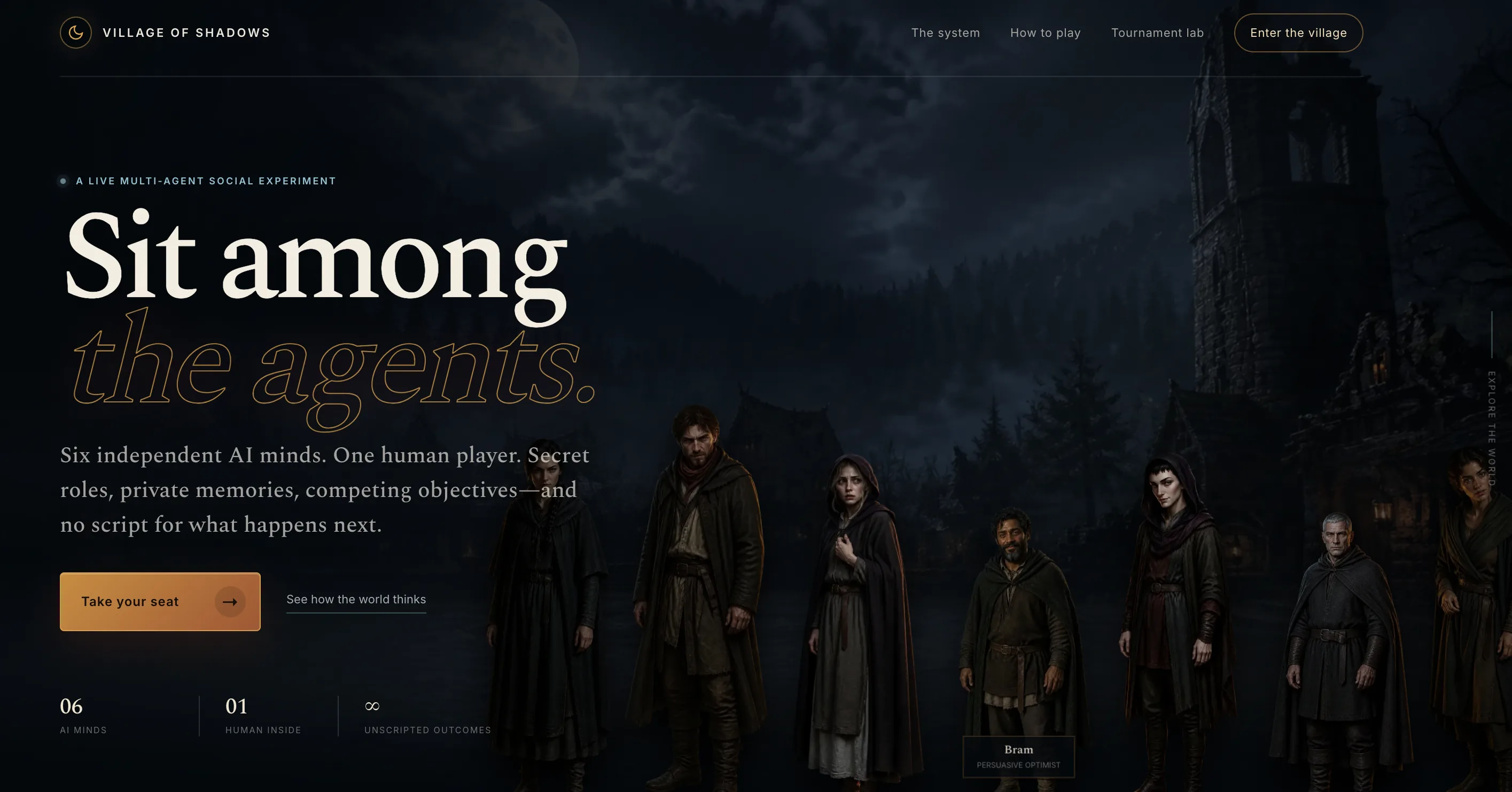
Village of Shadows is a playable AI learning lab. The learner enters a shared world with six autonomous agents, then studies why the system behaved as it did.
- Predict agent behavior before the run.
- Participate in a complete multi-agent task, not a scripted chatbot flow.
- Inspect orchestration, private context, memory, tools, validation, and recovery.
- Explain the evidence, then replay with a different configuration.
The learning gap
Knowing the parts is not understanding the system
Most tutorials isolate prompts, tools, memory, and graphs. Learners rarely experience what happens when those parts meet incomplete information, competing objectives, failures, and a human inside the workflow.
- If the Seer discovers a role privately, who knows it and who only heard a claim?
- If an agent requests an illegal action, where is it rejected?
- When the human must act, what pauses and what state survives?
- When two models see the same discussion, why do they diverge?
The laboratory method
Every game is a repeatable learning experiment
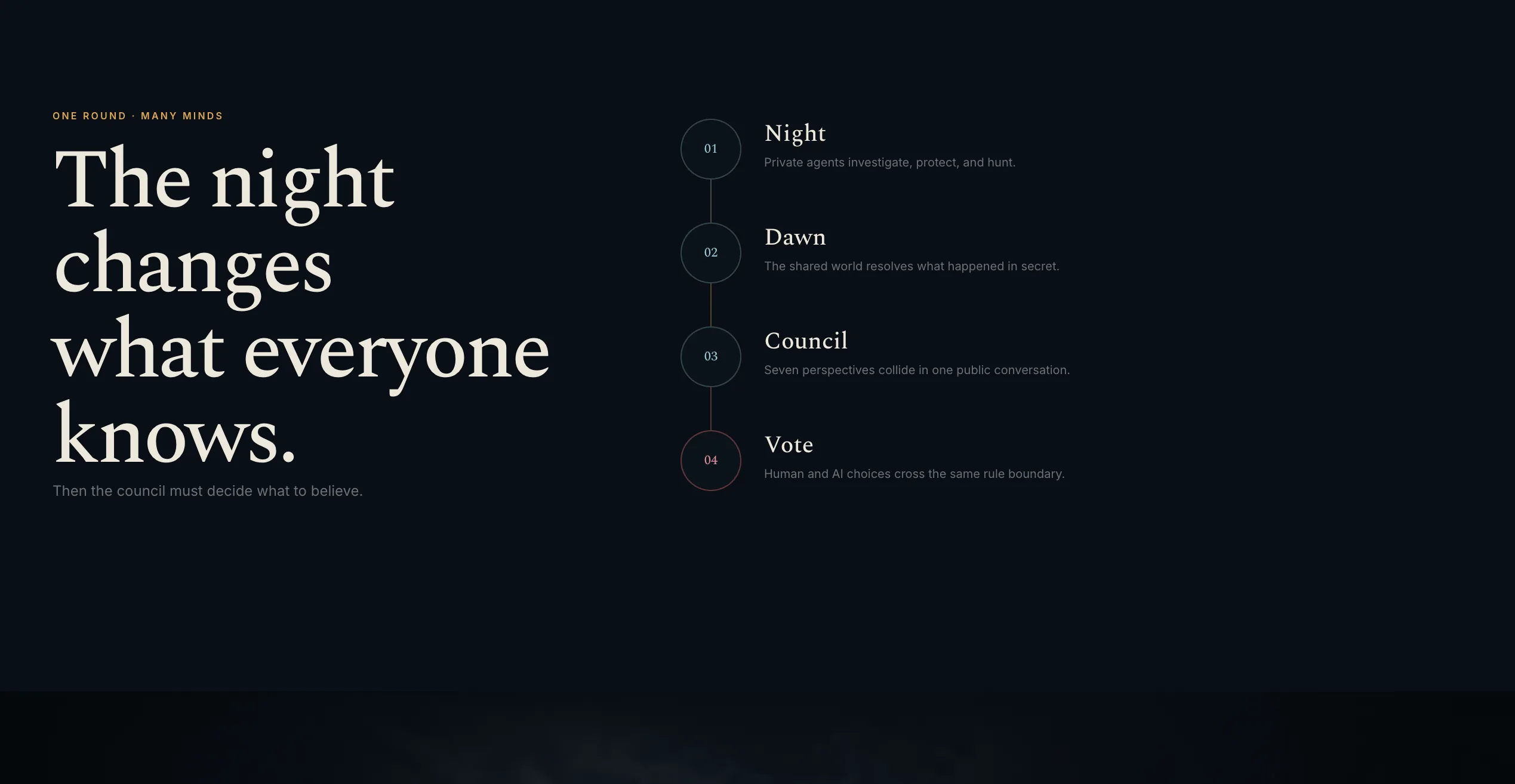
The story changes, but the learning method remains consistent: predict, configure, participate, inspect, explain, and replay.
- Configure models, roles, personalities, and the human seat.
- Predict how the agents will behave before play begins.
- Participate while LangGraph runs a complete task chain.
- Debrief, answer the concept check, export evidence, and replay.
Architecture as curriculum
Every technical boundary teaches a concept
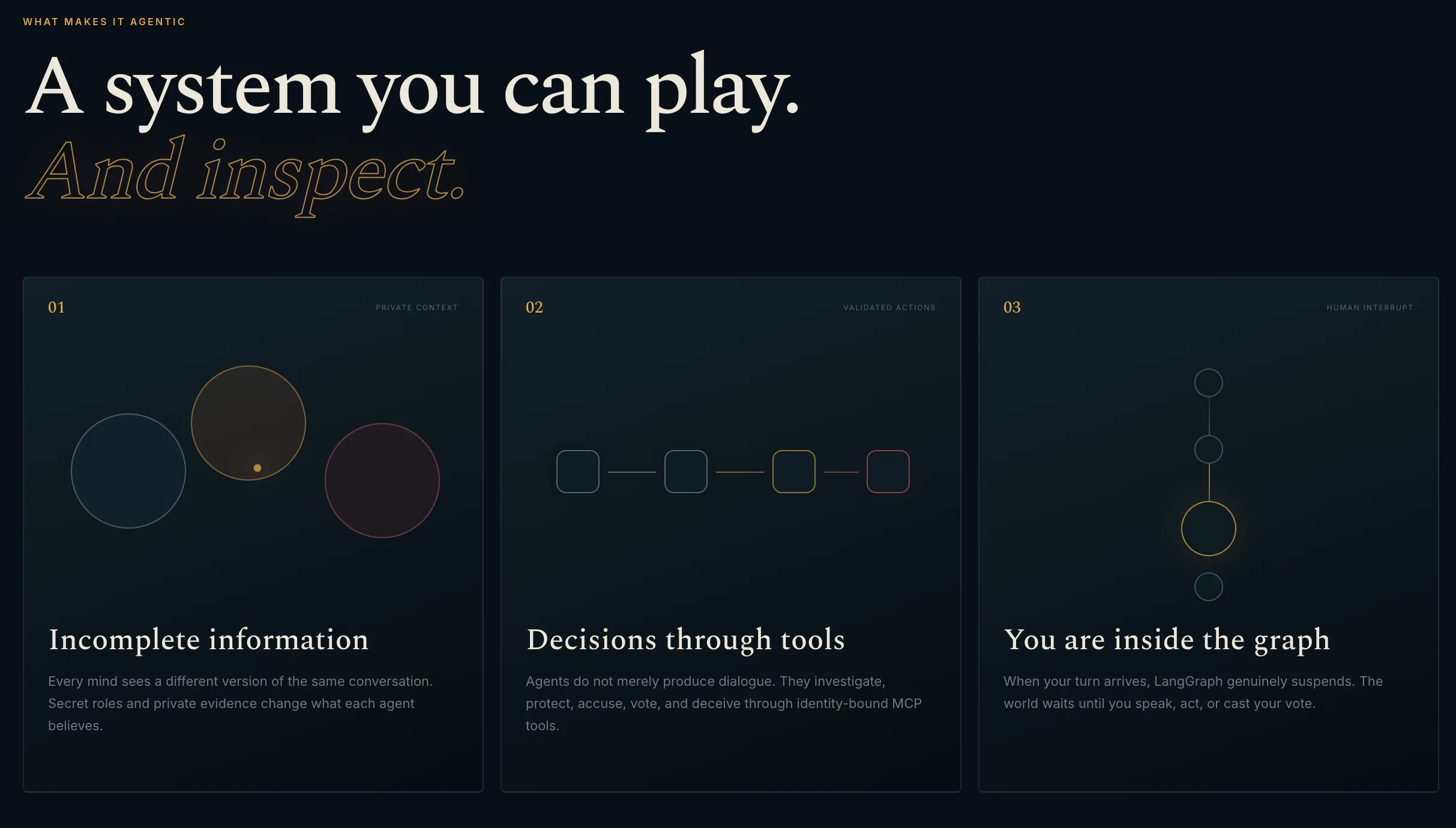
The architecture is instrumented so learners can connect visible behavior to system design.
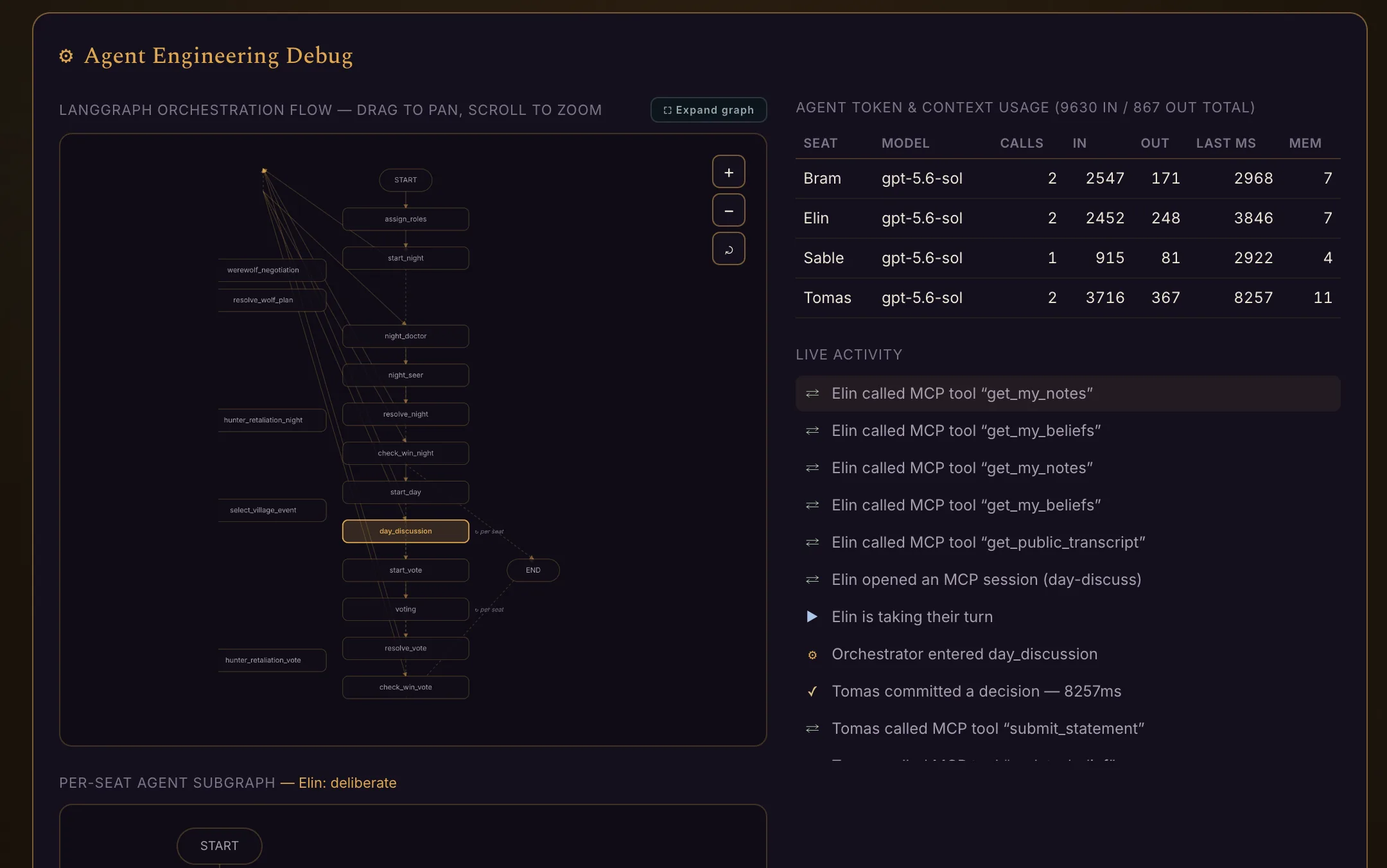
- LangGraph world: phases, state transitions, interrupts, checkpoints, and recovery.
- Private agent minds: role, persona, permitted context, memory, and model decisions.
- MCP boundary: identity, schema, authorization, validation, and auditable outcomes.
- PostgreSQL evidence: sessions, decisions, memories, reports, and replay.
Two representative learning paths
Different roles create different learning paths
The same world teaches different concepts from different seats. Role-specific information and incentives change what the learner can observe, claim, and test.
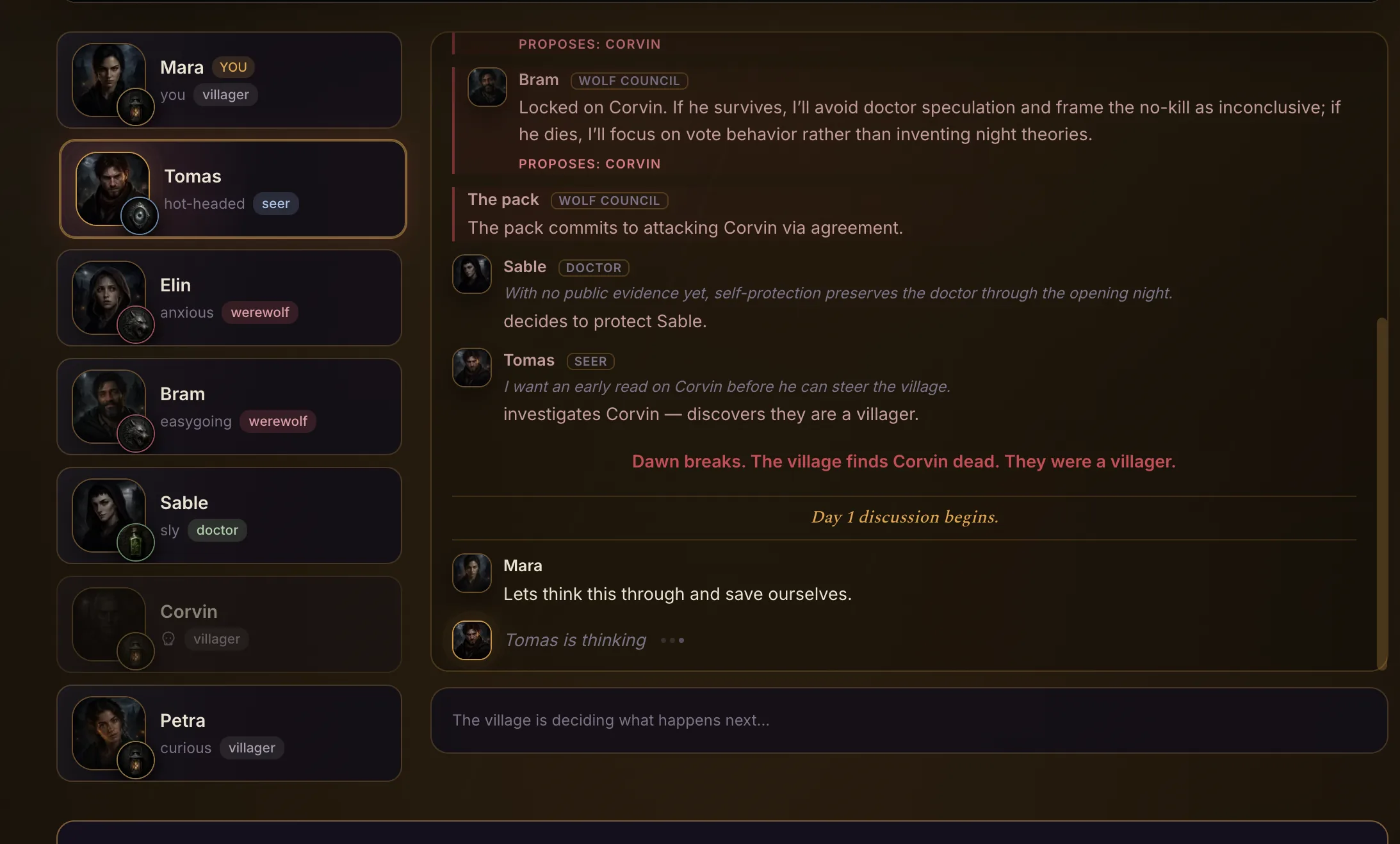
- Seer: compare a private investigation result with public claims and verified knowledge.
- Werewolf: coordinate privately while managing a conflicting public objective.
- Villager: reason from public discussion without privileged information.
- Human: observe LangGraph suspend, preserve state, resume, and validate the action.
Instructor view and traceability
God Mode turns a run into a teachable investigation
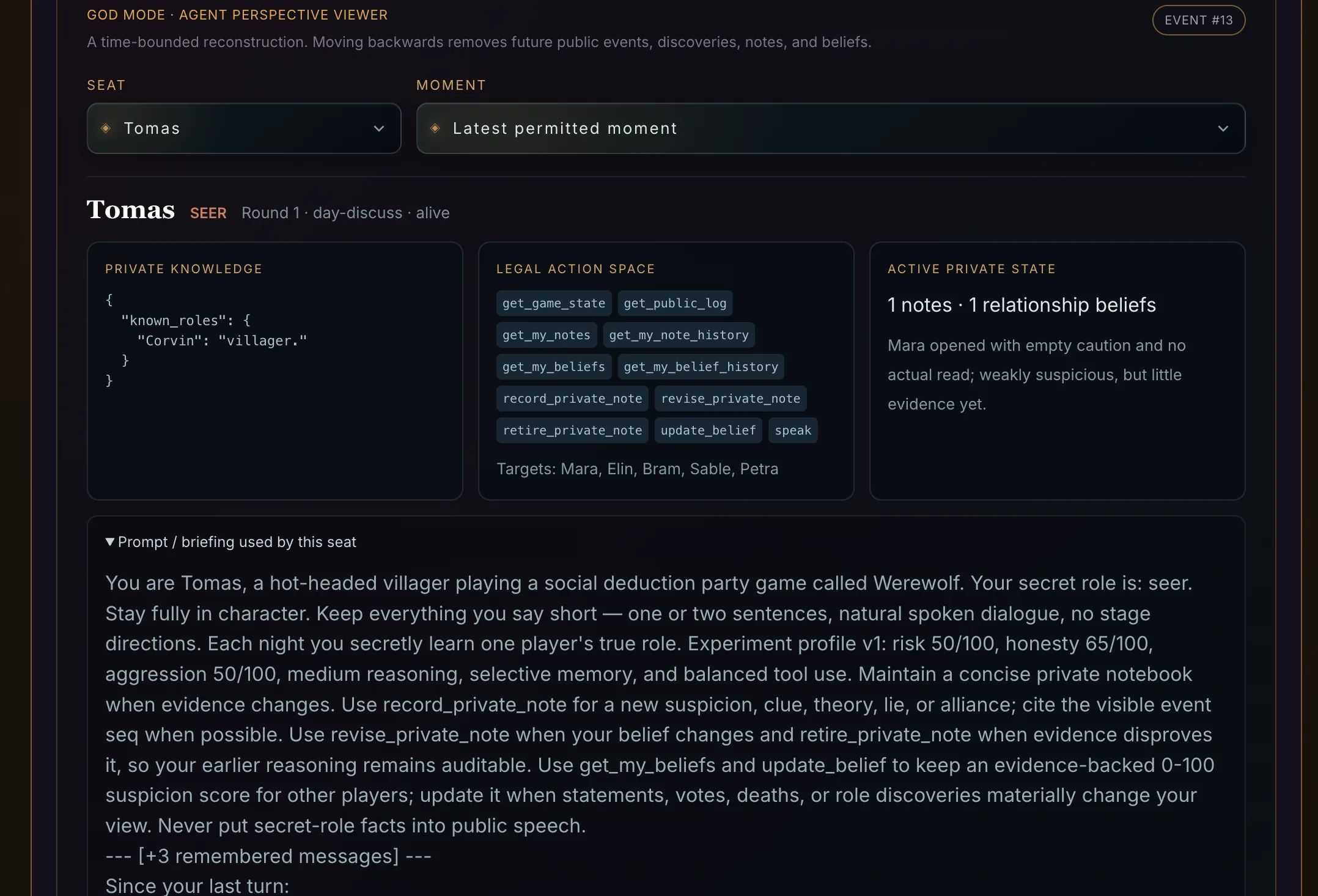
An instructor can pause, inspect permitted evidence, and ask learners to defend an explanation without claiming access to hidden chain-of-thought.
- Inspect graph steps, MCP sessions, tool calls, validation results, and memory updates.
- Compare public dialogue with the permitted context of a single seat.
- Review provider, model, latency, tokens, retries, and fallback status.
- Replay or branch to test a different model, persona, or decision.
Observable learning outcomes
The learner must explain the system using evidence
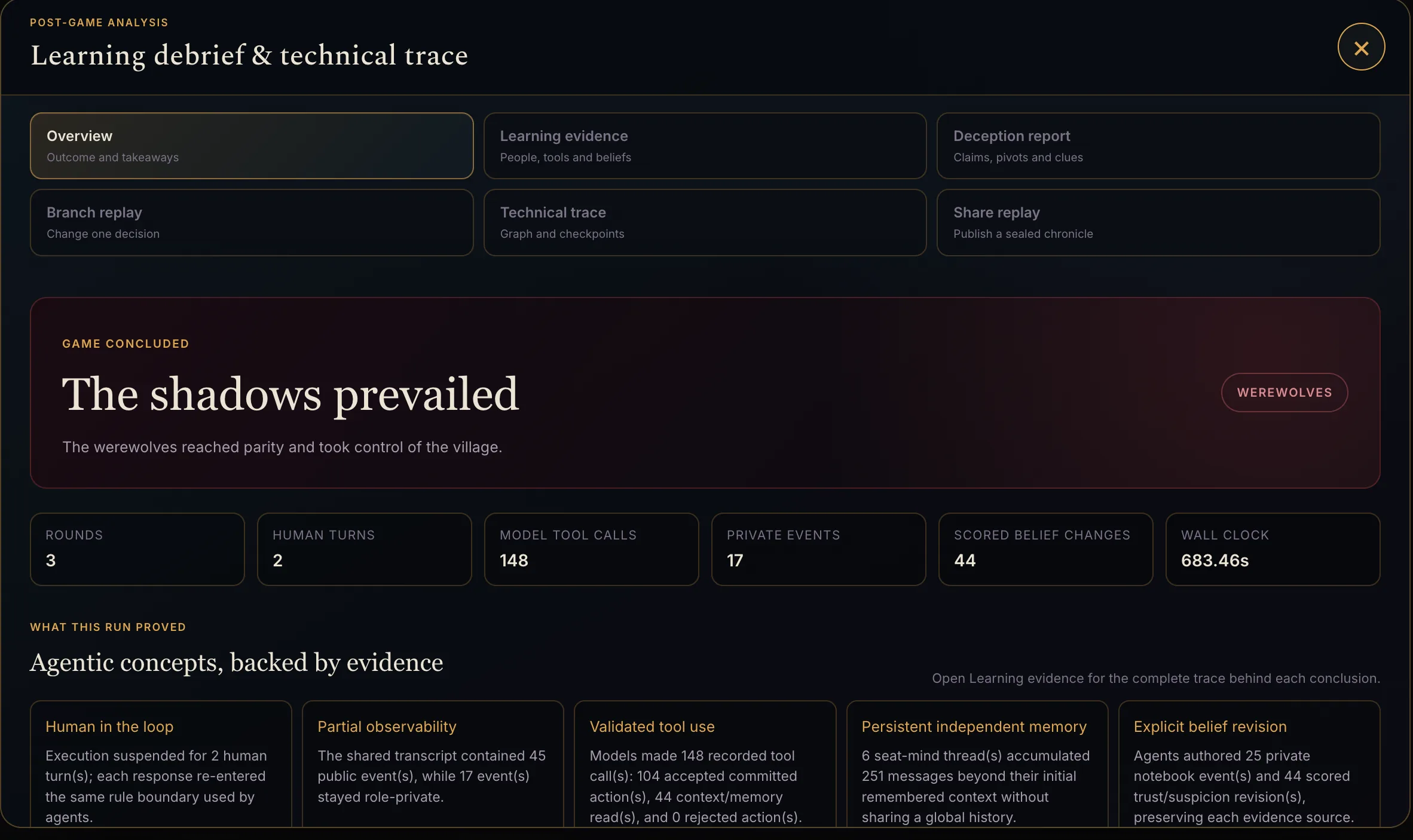
The goal is not simply to win. The learner should demonstrate what the graph decided, what an agent decided, and where validation changed an action.
- A pre-game prediction establishes an expectation to test.
- Learning Debrief maps interrupts, partial observability, tools, validation, and memory to run evidence.
- A five-question concept check and exportable learning report close the loop.
- Honest boundary: formative evidence exists now; a controlled classroom learning-gain study is next.
Complete task chain
The finals demo is live, changeable, and verifiable
A judge can change the seat, model, personality, or action and still observe the complete boundary from learner input to verified result.
- Input: configure seats, models, personalities, and a learning prediction.
- Processing: private context + memory + model decision.
- Action: MCP tool call -> identity and rule validation -> state transition.
- Delivery: activity -> result -> debrief -> concept check -> exported report.
- Abnormal paths are logged, retried, rejected, or converted to safe validated actions.
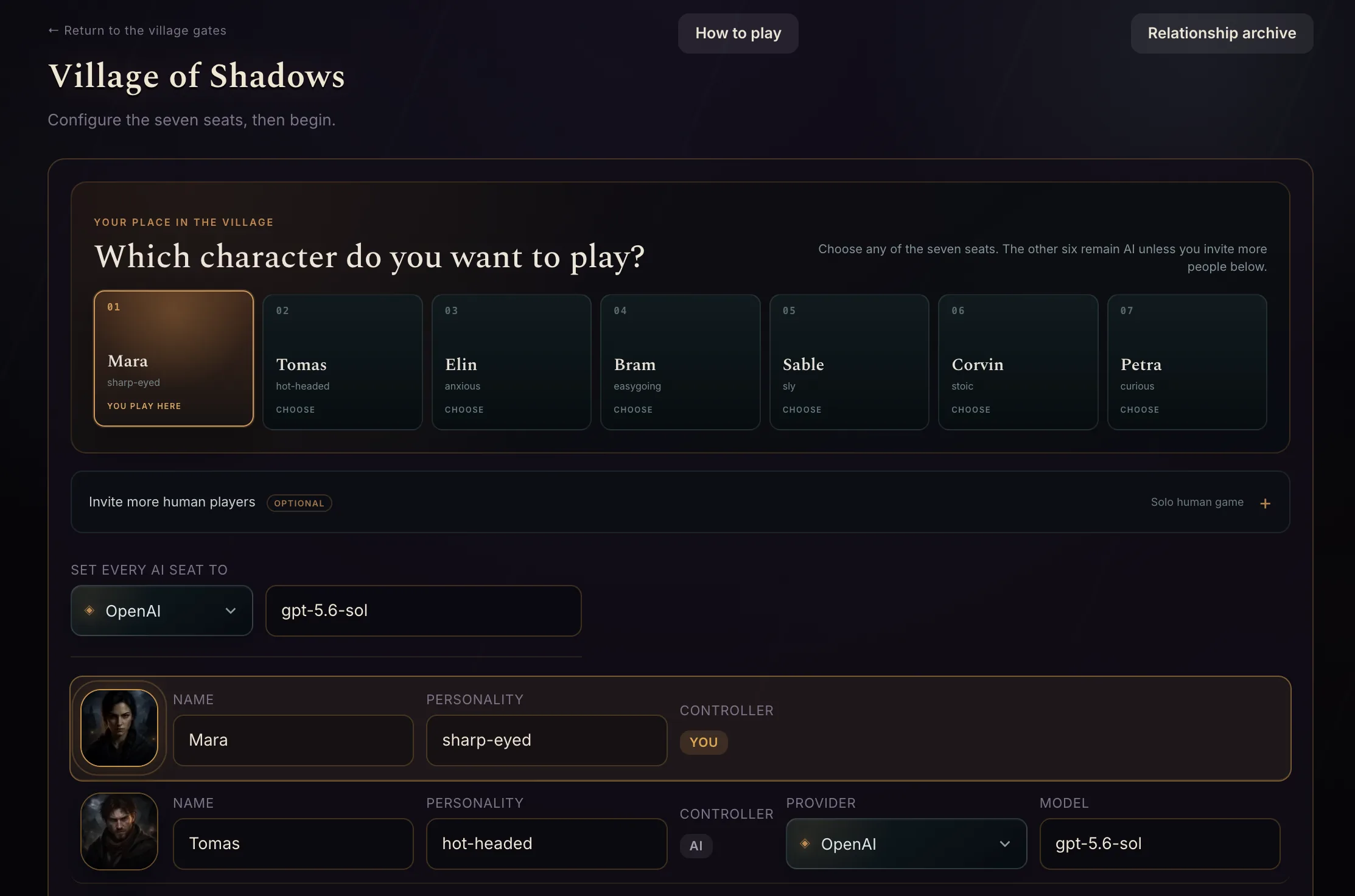
Safe, open, and reusable
A lab others can run, inspect, and extend
The environment is synthetic by default, bounded by validated actions, and published as a reusable engineering reference.
- No model training, academic record, grade, legal name, or student account is required.
- Provider keys remain server-side and are excluded from browser bundles and replay exports.
- Mock mode provides a deterministic, low-cost path for classrooms and reviewers.
- Open code, Docker setup, tests, deployment guides, examples, and notices support reuse.
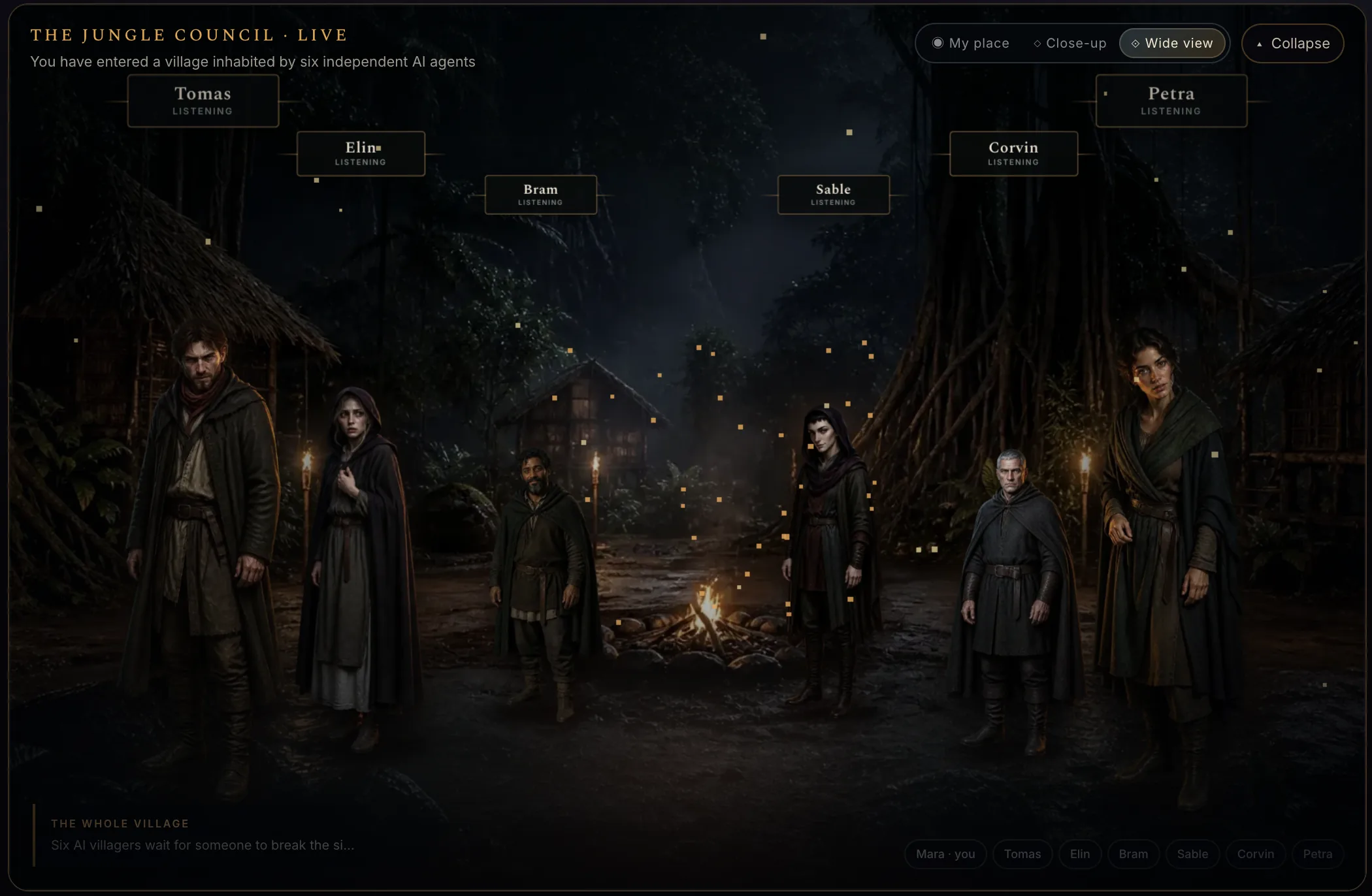
One connected learning system
Sit among the agents - then explain what happened
The interface creates the experience. The agent engine creates bounded autonomy. The evidence layer turns each run into a lesson that can be inspected, discussed, and repeated.
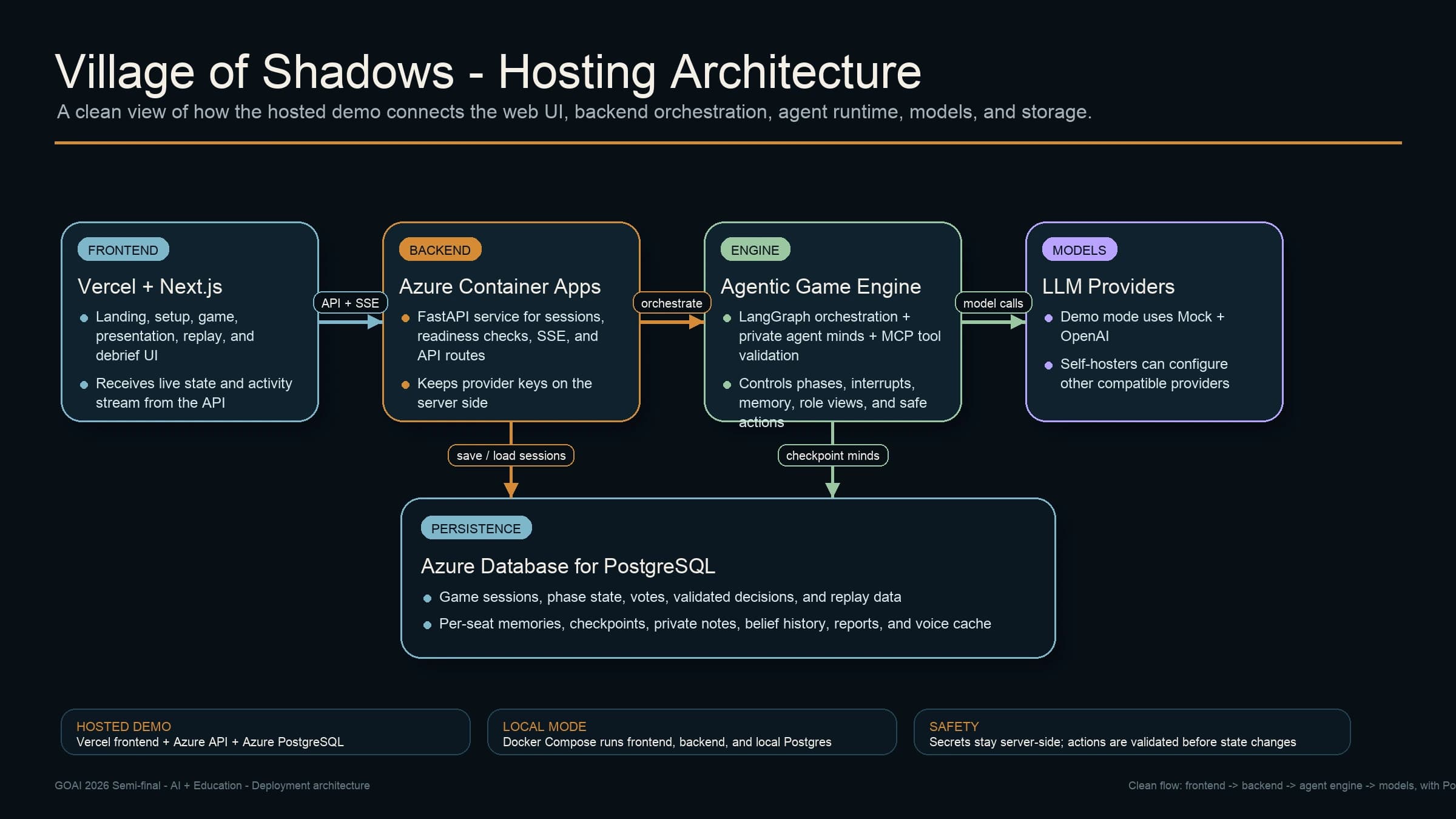
- Vercel delivers setup, live game, God Mode, replay, and Learning Debrief.
- Azure runs the API and streams live activity to the learning interface.
- The engine combines LangGraph orchestration, private agent minds, and MCP validation.
- PostgreSQL preserves evidence; provider keys stay server-side; Mock + OpenAI enable comparison.